


Cardiac Electrophysiology at the Poelzing Laboratory
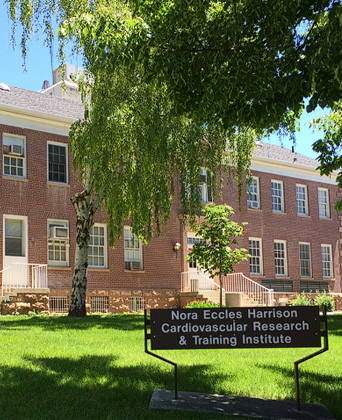
Cardiovascular Research and Training Institute

Research Interests    |    Classes    |    Contact    |   Selected Publications

Heterogeneities are required parts of systems. However, extreme differences are often the hallmark of a disease. We need to understand what promotes these extremes and the implications of such extremes. This goal requires the work of many people working on many different processes... a heterogeneity of science if you will.


RESEARCH INTERESTS

Regional Ventricular Heterogeneities
In order to better understand the results of remodeling that occurs in disease states, we must first understand the differences that make up the entire system. For a long time, the left ventricle has been the focus of much study because it is the ventricle which provides systemic circulation. However, the right ventricle has many unique properties which suggest that it may be as important for understanding where arrhythmias originate. To that end, this project looks at all areas of both ventricles from the apex to base, left to right, anterior to posterior, and epicardium to endocardium.

The two projects for studying interventricular heterogeneities are:
Andersen-Tawil Syndrome-1 (ATS1). ATS1 in humans is characterized by frequent non-sustained runs of bi-directional VT. We have recreated this phenomenon in a guinea pig drug induced model of ATS1. Importantly, the originating beats arise from specific regions of the heart. The purpose of these studies is to understand the calcium regulatory mechanisms underlying this regionally preferential manifestation of these arrhythmic beats.
The Connexin-Conduction Relationship. In guinea pig, right ventricular tissue conducts electrical impulses from cell to cell faster than the left ventricle despite a lower protein concentration of the principal gap junction protein connexin43. This project explores this apparently paradoxical finding.

Current Voltage Spectroscopy
Ion channels can be modeled as simple resistor capacitor networks. The purpose of the model is to predict many behaviors as simplistically as possible. However, we may gain further insights into ion channel behavior if we remember that ion movement through a channel is a very dynamic process that includes more than a single value for the conductance of an ion across the membrane. New studies tell us that the method by which an ion moves through the protein channel is a highly regulated process where the ion usually goes through an elaborate route dictated by amino-acid locations. This suggests that each process may be governed by different rate constants and the overall measure of transmembrane conductance may be only a very small part of the picture and our understanding. To understand these differences, we are measuring the response to transmembrane conductance in the presence of specific electric field frequencies hoping to better understand the differences between ion channel conductances. The end goal of this work is to be able to measure the individual contributions of ion channels to the action potential in real time.

Non-traditional Bioelectric Mapping
Current methods for measuring electrical potentials in excitable tissue include microelectrode recordings, optical mapping with voltage sensitive dyes, and needle recordings. Microelectrode recordings are considered the gold standard for measuring the transmembrane potential of a single cell. However, it is difficult to have many stable microelectrode recordings for the billions of myocytes that make up a heart. Optical mapping with voltage sensitive dyes allows one to measure the transmembrane potential over an average area of tissue. However, the average signal comes from a group of myocytes, can only be measured from a 2-D surface, and is complicated by optical phenomenon. A needle electrode can have multiple electrodes at fixed distances which can be pushed into the depth of the heart. However, these electrodes measure electric fields instead of transmembrane potential. Furthermore, data generation is difficult because the spatial orientation of the needles is time consuming to quantify. There is also a concern that plunging electrodes through tissue may generate some type of injury response in the tissue. We are investigating alternative minimally invasive methods for measuring bio-electric phenomenon in 3-D.


CLASSES

BIOEN 1101: Introduction to Biomedical Engineering

BIOEN 3202: Physiology for Engineers

BIOEN 6460: Electrophysiology and Bioelectricity of Tissues

BIOEN 6464: Contemporary Topics in Cardiac Electrophysiology


CONTACT

Steven Poelzing, Ph.D.
Research Assistant Professor of Bioengineering
University of Utah
Cardiovascular Research and Training Institute
95 South 2000 East, Room 233
Salt Lake City, Utah 84112-5000
 

Phone: 801-585-1862
Fax: 801-581-3128


Research Interests    |    Classes    |    Contact