.png)



CUTTING EDGE CARDIOVASCULAR RESEARCH
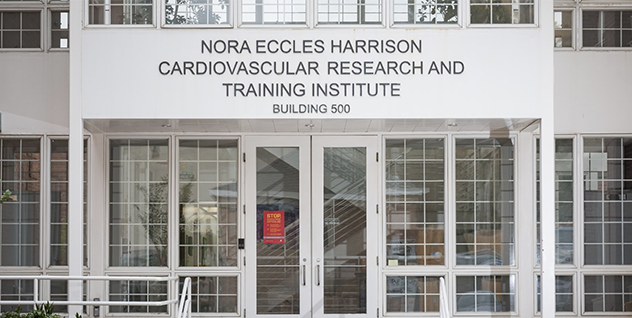
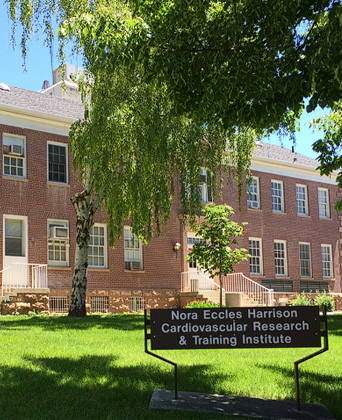
The Nora Eccles Harrison Cardiovascular Research and Training Institute (CVRTI) delivers cutting-edge cell-to-bedside research and education of cardiovascular disease, which is one of the leading causes of death worldwide. At the CVRTI, we are both developing new insights into the biology of heart muscle cells, and developing novel therapeutics for patients with heart failure and cardiac arrhythmias such as sudden cardiac death.
Located at the University of Utah, the CVRTI nucleates a campus wide, multidisciplinary team of eighteen individual investigator laboratories who are both scientists and physician scientists. The research of the laboratories spans from basic muscle biology and channel electrophysiology to metabolism and genetics. Founded in 1969, the CVRTI is one of the oldest cardiovascular institutes in the country, and its research has already impacted clinical care from development of the first artificial heart, to the genetic basis of long QT arrhythmias, to using electricity to map heart dimensions for arrhythmia ablation, to myocardial recovery, to novel therapeutics for heart failure and sudden cardiac death. At present, the CVRTI is the largest freestanding collection of cardiac muscle biology, metabolism, vascular and electrophysiology researchers in the United States and serves as the physical location and central hub for cardiovascular research at the University of Utah.
CVRTI Seminar Series
Thursday, December 11, 2025
12:00 PM – 1:00 PM MT

Unraveling the Mechanisms of Fight or Flight: How the Heart Responds to Adrenergic Signals
Steven Marx, MD
Herbert and Florence Irving Professor of Cardiology
Professor of Medicine
Columbia University
Join us in person only at
Eccles Health Sciences Education Building, EHSEB, Bldg. 575, Room 1700, 25 S. 2000 E. (Lunch Provided)
Latest Blog
As we age, we gradually lose muscle mass as part of the natural aging process. This muscle loss can become more pronounced as we enter our senior years. In some cases, the loss of muscle mass and strength is enough to become a medically concerning condition known as sarcopenia.